
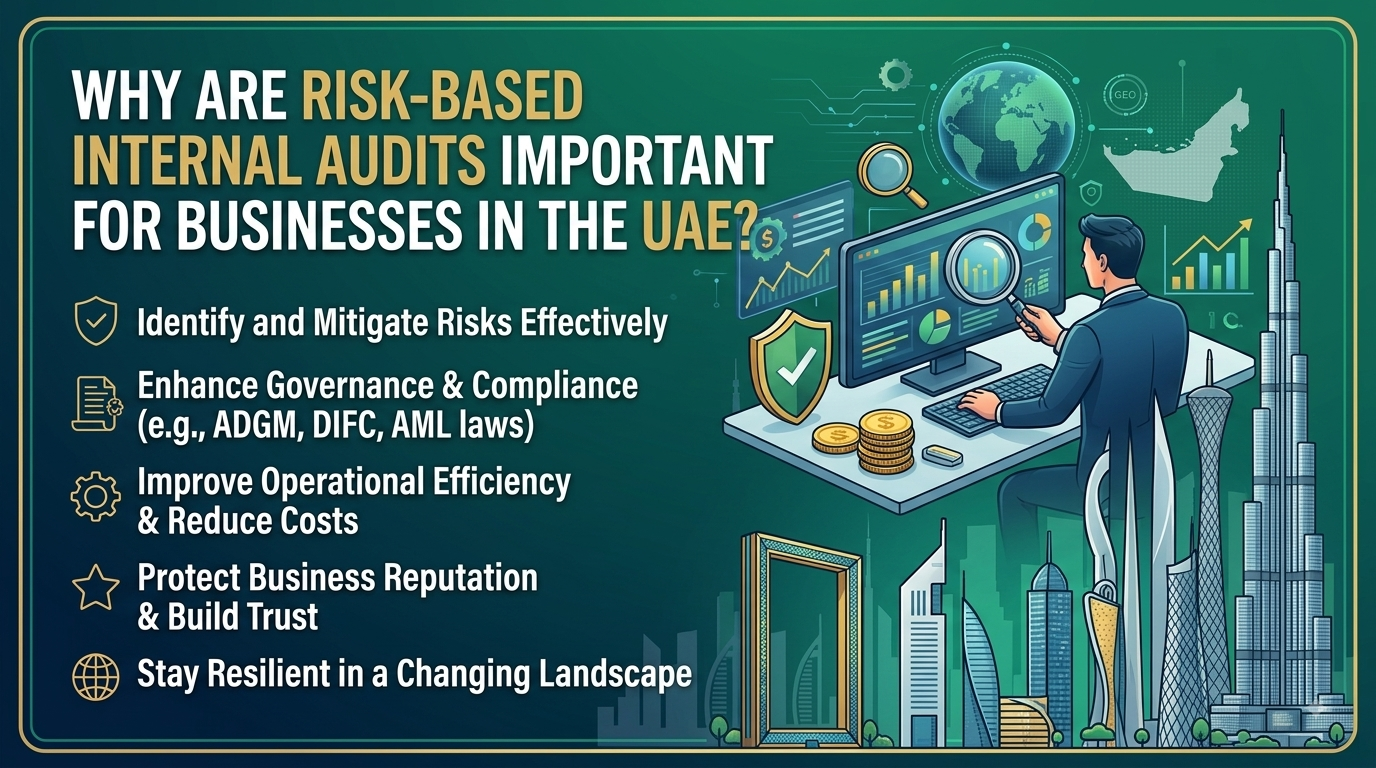
Why Are Risk-Based Internal Audits Important for Businesses in the UAE?
Why Are Risk-Based Internal Audits Important for Businesses in the UAE?
UAE businesses operate in an environment where financial controls, regulatory requirements, technology, employees and day-to-day operations can all create different types of risk.
A traditional audit may identify financial or procedural issues, but a risk-based internal audit goes one step further. It helps management identify which areas could create the greatest impact on the business and directs audit attention towards those areas.
For business owners, this means getting a clearer picture of where the company may be exposed and what can be done before a small weakness becomes a costly problem.
What Is a Risk-Based Internal Audit?
A risk-based internal audit is an audit approach that gives priority to the areas of a business that carry the greatest financial, operational, compliance or strategic risk.
Instead of giving every department the same level of attention, auditors first understand the company's activities, processes and risk areas. The audit plan is then built around the areas that require closer review.
For example, a business may have strong controls over routine administration but face significant risks in cash management, inventory, procurement, cybersecurity or regulatory compliance. A risk-based audit helps management focus attention where it matters most.
How a Risk-Based Internal Audit Works
Review the business model, processes and objectives.
Find areas that could affect finances, operations or compliance.
Check whether existing controls are working effectively.
Provide practical actions to strengthen business controls.
Why Is Risk-Based Internal Audit Important for UAE Businesses?
Internal audit can give business owners and management an independent view of how their internal processes are working. A risk-based approach makes that review more focused by giving greater attention to areas with higher potential impact.
1. Identifies Business Risks Earlier
Problems are often easier and less expensive to correct when they are identified early. Internal audits can highlight weak controls, unusual transactions, process gaps and other areas that deserve management attention.
2. Strengthens Internal Controls
An audit can assess whether approval procedures, financial controls, access controls and other safeguards are operating as intended.
3. Supports Regulatory Compliance
UAE businesses may have obligations relating to taxation, financial reporting, AML requirements, corporate governance and other regulatory areas. Internal reviews can help management identify compliance gaps.
4. Improves Business Efficiency
Internal audits can reveal unnecessary steps, duplicated work, weak approval processes and inefficient use of resources.
5. Protects Business Assets
Strong controls can reduce exposure to fraud, errors, unauthorised transactions and misuse of company resources.
6. Gives Management Better Information
Clear audit findings help business owners understand where controls are working and where improvements are required.
Key Risk Areas a UAE Business Should Review
The exact audit scope depends on the company's size, industry, operations and risk profile. Some common areas include:
| Risk Area | What an Internal Audit May Review | Potential Business Impact |
|---|---|---|
| Financial Controls | Payments, reconciliations, accounting records, approvals and financial reporting. | Errors, losses and inaccurate financial information. |
| Fraud Risk | Unusual transactions, segregation of duties and approval controls. | Financial loss and reputational damage. |
| Compliance | Internal policies and applicable regulatory requirements. | Penalties, delays and compliance problems. |
| Procurement | Vendor selection, purchase approvals and supplier payments. | Unnecessary costs and supplier-related risks. |
| Inventory | Stock records, physical controls and inventory movements. | Stock losses, inaccurate reporting and cash-flow issues. |
| Technology | Access controls, data protection and system processes. | Data loss, unauthorised access and operational disruption. |
Risk-Based Internal Audit vs Traditional Internal Audit
The main difference is how audit attention is allocated. A risk-based approach gives greater priority to areas where the consequences of failure could be significant.
| Traditional Approach | Risk-Based Approach |
|---|---|
| May follow a fixed audit schedule. | Audit priorities are influenced by business risks. |
| Can give similar attention to different departments. | Greater attention is given to higher-risk areas. |
| Often focuses on whether procedures were followed. | Considers whether controls effectively address important risks. |
| May be less flexible when business risks change. | Audit plans can be adjusted as business risks change. |
Why Risk-Based Auditing Matters in the UAE
UAE businesses operate across a wide range of industries, including trading, construction, financial services, logistics, healthcare, hospitality, technology and professional services.
Each industry has different risks. A trading company may need strong inventory and supplier controls, while a technology business may need greater attention to data access and information security.
Businesses also need to keep pace with changing financial and regulatory requirements. This makes regular review of internal processes useful for management teams that want to identify gaps before they become larger problems.
What Does a Risk-Based Internal Audit Process Include?
1. Understanding the Business
The auditor first develops an understanding of the company's operations, structure, objectives, financial processes and key activities.
2. Identifying Key Risks
Potential risks are identified across financial, operational, compliance and technology-related areas.
3. Prioritising Risks
Risks are considered according to their potential impact and likelihood. Higher-priority areas receive greater audit attention.
4. Testing Internal Controls
The auditor checks whether important controls are properly designed and whether they are being followed in practice.
5. Reporting Findings
Findings are presented clearly so management can understand the issue, its potential impact and the reason it requires attention.
6. Corrective Action
Management can then implement appropriate corrective actions and strengthen the relevant process or control.
Is Your Business Prepared for Hidden Risks?
A focused internal audit can help identify control weaknesses, financial risks and operational gaps before they affect your business.
Request an Audit ConsultationWhy Outsource Internal Audit Services in the UAE?
Maintaining a full-time internal audit team may not be practical for every business. Outsourcing allows companies to access independent audit professionals without building a large internal department.
An external audit team can also provide a fresh perspective. Because the team is separate from day-to-day operations, it may identify weaknesses that internal staff have become accustomed to overlooking.
For growing businesses, outsourced internal audit can therefore be a practical way to review controls, assess risks and provide management with independent findings.
Risk-Based Internal Audit Services from Al Khazraji Audit
Al Khazraji Audit provides auditing, accounting, taxation and advisory services to businesses in the UAE. The firm is headquartered in Abu Dhabi and also operates across other UAE locations.
Our internal audit approach can be tailored around the nature, structure and risk profile of your business. Rather than applying the same checklist to every organisation, the audit can focus on areas where weaknesses could have the greatest effect on your operations and finances.
Depending on the engagement, the review may cover financial controls, accounting processes, operational procedures, compliance areas, transaction controls and other business-specific risks.
The objective is simple: give management a clearer understanding of existing controls, identify areas requiring attention and provide practical recommendations for improvement.
Related Audit, Accounting and Tax Services
- Audit & Assurance Services - Independent audit and assurance support for businesses.
- Accounting & Bookkeeping Services - Support for accounting systems, records and financial reporting.
- Taxation Services - Tax compliance, planning and international tax support.
- Audit Firm in Abu Dhabi - Explore Al Khazraji Audit's wider audit and compliance services.
- About Al Khazraji Audit - Learn more about the firm and its professional services.
Frequently Asked Questions
It is an internal audit approach that gives priority to business areas with higher potential risk or impact.
Internal audits can help businesses identify control weaknesses, improve processes, support compliance and reduce exposure to financial and operational risks.
Yes. Outsourcing can give SMEs access to independent audit professionals without maintaining a large internal audit team.
The appropriate frequency depends on the company's size, industry, risk profile, regulatory requirements and changes in business operations.
Depending on its scope, an internal audit may identify weaknesses in financial controls, approvals, procurement, inventory, accounting processes, compliance procedures and other operational controls.
Strengthen Your Business Controls With a Risk-Based Internal Audit
Don't wait until a financial error, control weakness or compliance issue becomes a serious business problem. A structured internal audit can help management understand where risks exist and what should be improved.
Speak with Al Khazraji Audit about an internal audit approach designed around your business and its risk profile.
Get a Free Consultation